 U.S. Edition

“I hadn’t weighed myself in four years. I genuinely thought I’d put on about ten pounds.” The nurse at her Columbus doctor’s office wrote the number down, turned the screen round, and Nicole Bentley did the arithmetic twice because she was certain she’d misread it.
It was not ten pounds. It was closer to forty — accumulated quietly, at roughly six pounds a year, since her thirty-ninth birthday. Never fast enough to alarm her. Never slow enough to stop.
Nicole calls it the invisible weight: the weight that arrives without a single identifiable decision behind it. No binge. No giving up. Just a body that, somewhere in the early forties, quietly changed the rules of a game she was still playing by the old ones.
Six weeks later she walked into a photographer’s studio in Cincinnati for her 25th anniversary portraits in a dress she’d bought optimistically in 2013 and never once managed to zip up.
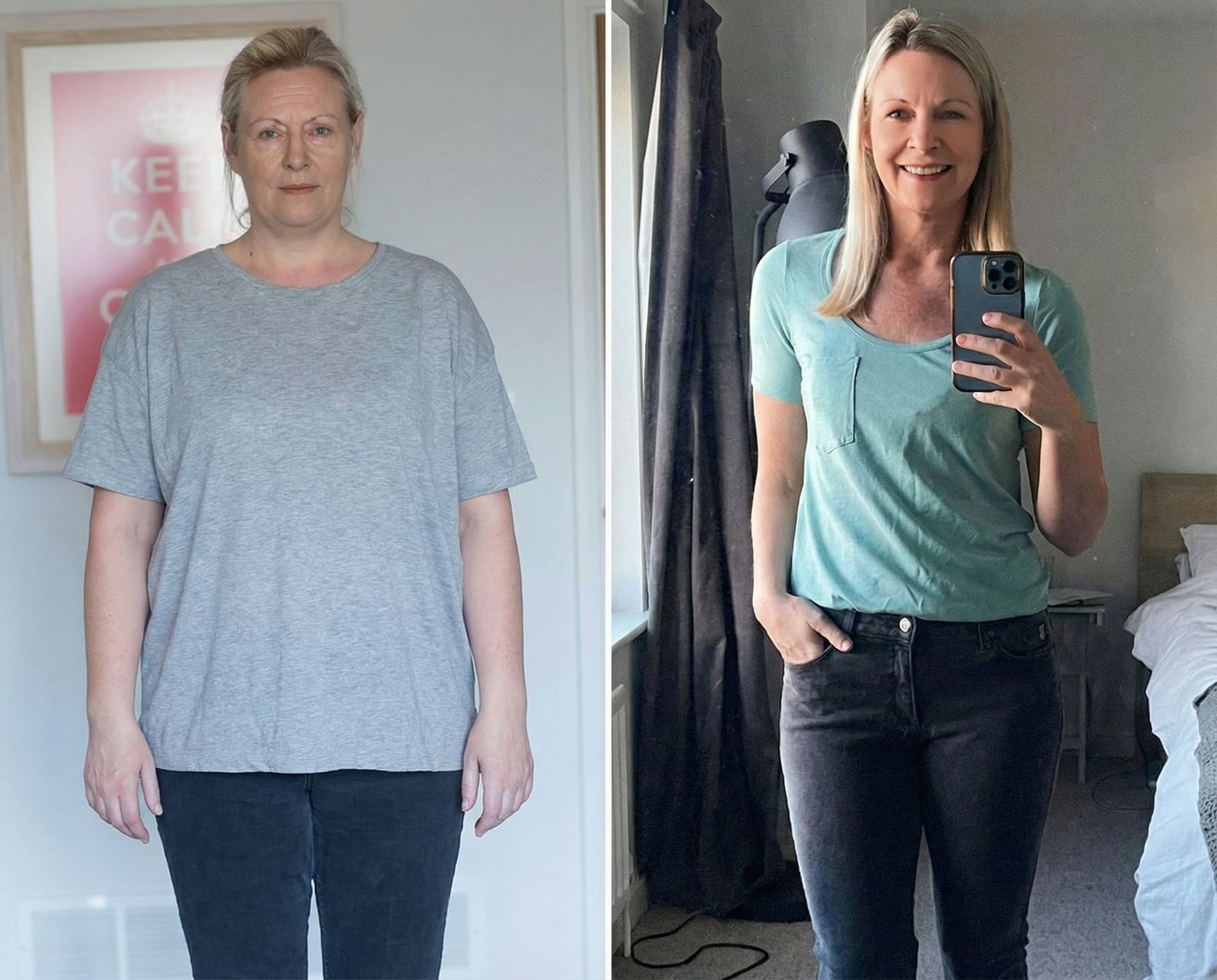
“I wasn’t eating more. That’s what nobody could explain to me.”
This is the part of the story that gets the loudest response whenever we publish it, because it is so familiar it stings.
“I was eating less than I did at thirty. Smaller portions, hardly any bread, one glass of wine on a Friday instead of three. And the scales just sat there. You start to feel like you’re either lying to yourself or losing your mind.”
— Nicole Bentley, 46, school office manager, Columbus, Ohio
She had done the obvious things, and she had done them properly. Two full years on a points-based diet program — the first year worked, the second undid it. A Couch to 5K that ended at week six with a plantar fascia that still complains on cold mornings. A January of 5:2 fasting that made her so irritable her youngest asked whether she and dad were “having a problem”.
Then, last spring, a consultation at a med spa about the weight-loss injections everybody at work seemed to be whispering about. She left with a monthly figure her insurance wouldn’t touch — one that would have swallowed the family vacation fund whole — and a pamphlet she put straight in the recycling on the way to the car.

The appointment that started it
The annual physical was routine — the sort of appointment most people reschedule at least twice. Nicole only went because her husband nagged.
Blood pressure: borderline. Fasting glucose: the upper end of normal, with the word “monitor” attached. Waist measurement: the one she describes as “the bit where I stopped listening”.
Her doctor was neither dramatic nor unkind. He explained that the fat that gathers around the middle after forty is not the same tissue as the fat that sits on the hips — that it is metabolically active, that it sits around the organs, and that it is the kind that shows up in bloodwork long before it shows up in a mirror.
Nicole left with a pamphlet, a six-month follow-up and, she admits, “an absolutely filthy mood”. What changed things was a message in the family group chat four days later, from her sister-in-law in Dayton, containing a photograph and the single line: “Before you say anything — it’s just in my coffee.”
So what actually changes in your forties?
We put that question to Dr. Alan Frayne, a physician specializing in metabolic medicine who has spent eleven years working with midlife patients and who contributed to the formulation work behind the product Nicole eventually tried.

“Patients tell me they’ve lost their willpower. They haven’t. What they’ve lost is insulin sensitivity, a slice of resting metabolic rate, and — for women — the estrogen that was quietly telling the body where to put fat. Three separate changes, all pushing in the same direction, arriving within about a decade of each other.”
— Dr. Alan Frayne, metabolic medicine specialist
The practical consequence, he says, is brutal and unfair: the same plate of food that maintained your weight at thirty-two now adds to it at forty-five — and the body defends the fat it has stored around the middle more stubbornly than the fat anywhere else.
Which is why, in his view, the two things most people reach for are the two things least likely to work. Eating less asks a slowed metabolism to slow further. Exercising more, on a bad knee, in a Midwestern February, after a nine-hour shift, asks for a level of consistency that real life simply does not permit.

Why everyday American life makes this so much harder than it should be
Nicole’s story lands because the obstacles in it are national, not personal. Reader after reader tells us the same things:
- Shift patterns, long commutes and desk jobs — routine is the first casualty of real working life
- Sunday dinners, Friday takeout, the Tuesday drive-thru between practice and pickup — eating here is social, and it stacks up fast
- Perimenopause, menopause and thyroid drift — after forty the body stops cooperating and nobody warns you
- Knees, hips, plantar fasciitis and sheer exhaustion — when movement hurts, “just exercise more” is not advice
- Dark afternoons from October to March — five months of weather that actively encourages comfort eating
- The grocery-bill squeeze — when fresh food is expensive, convenience wins the argument
- Caring in both directions at once — teenagers on one side, ageing parents on the other, nothing left over
None of those are character flaws. They are the conditions most people in this country are actually trying to lose weight in — and any approach that requires them to disappear first was never going to survive contact with a Wednesday.















Discussion
24 commentsHas anyone here actually tried this? I’m 48, my insurance won’t cover the weight-loss program my doctor suggested, and paying cash for the injections is well beyond us. Perimenopause is piling it on. Genuinely need real experiences, not adverts.
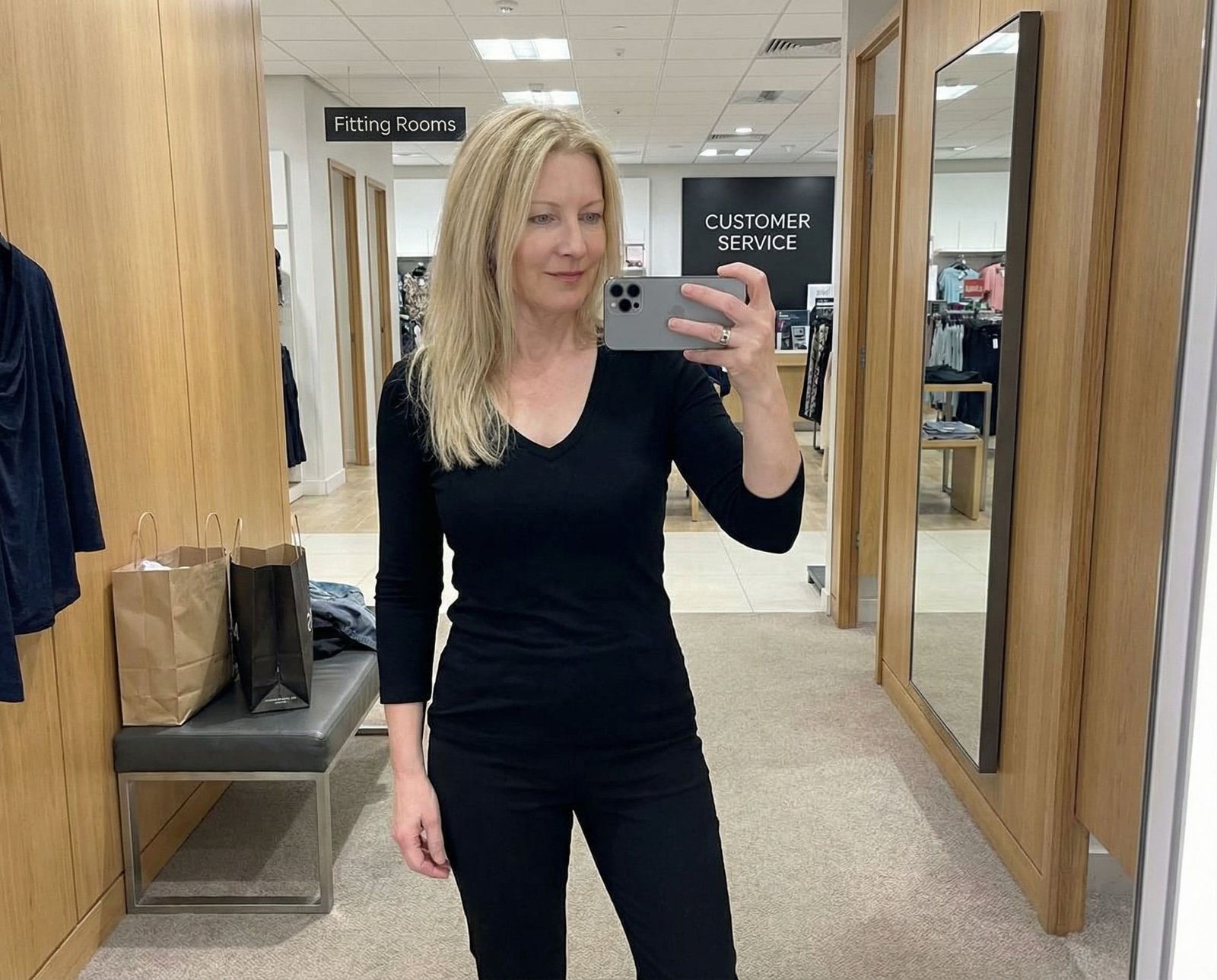
Sarah — same boat, Toledo, 51. I’m on week seven. I haven’t changed anything else and the four o’clock cookie habit has genuinely stopped. Photo from Saturday, my daughter took it and I didn’t hide behind anyone for once.
Seconding this. My sister-in-law put me onto it and I was convinced it’d be another detox tea thing. It isn’t. No jitters, which was my main worry.
The “invisible weight” phrase in this article really got me. That is exactly it. Seven pounds a year for six years and I could not have told you when any of it happened.
Skeptic here. What’s the catch? Everything like this ends up being a subscription you can’t get out of.
Fair question and I checked for exactly that reason. One-off order, no recurring anything, and the refund covers an opened box. Third one now and I’ve never had a card charge I didn’t ask for.
Bought it for me, my mom and my neighbor. Mom’s 71 and it’s the bloating she’s noticed most. We’re all on the same group text comparing notes like a little research team 😄
Week three. Scales have barely moved but my wedding ring goes on and off without soap for the first time in about four years, so something is happening.
Please do check with your doctor if you’re on anything, folks. I’m on thyroid medication and I asked my pharmacist before I started. She was completely fine about it but I’d rather ask than guess.
Came back to say thank you to whoever recommended this in the comments last month. Six weeks. 25th anniversary party this weekend and I’m wearing something with a zip. 🥹